Alopecia Areata—the most common form of baldness
Alopecia areata is the most common form of hair loss, which usually results in spots of baldness. Sometimes, in the most complicated cases of alopecia, the whole head becomes bald. Usually, the 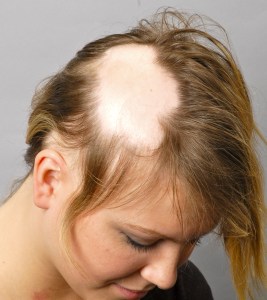 patches of baldness recover and the hair regrows; however, it may take 7–10 months and even up to a few years. The baldness may become long-lasting or even permanent, depending on the causes of hair loss, the individual’s medical condition, external physical factors, and the form of development.
What is alopecia, and who is it affecting?
Alopecia is a medical condition that causes hair loss, which results in baldness. The lifetime of hair is approximately 4-6 years. That means that every day some hairs die and fall… At the same time, new hairs grow. Medical scientists and researchers believe that losing 40–60 hairs per day is normal. However, when this number goes up over 100, it is considered a pathological medical condition. Different external and internal factors can cause hair loss in a variety of forms. The most common causes of alopecia are:
Physical Stress causes baldness
Any type of somatic bodily injury, such as a surgical procedure, personal injury, viral or bacterial infection, or even a simple flu, may result in short-term hair loss and baldness. Any of these factors may initiate a form of hair loss named telogen effluvium. As previously mentioned, each individual hair undergoes a life cycle that includes a development period, a rest period, and a flaking time. Marc Glashofer, MD, a board-certified dermatologist from New York, NY, explains: “Any significant stress, emotional trauma, or infectious disease may distress the life cycle of hairs, forcing a significant number of them into the flaking stage.” Baldness as a result of this broken life cycle may become visible a few months or even half a year after the event.
Pregnancy may cause hair loss
Pregnancy is another common cause of hair loss because it often places a woman in a state of chronic stress, and during this time, hormonal balance may be disrupted. When pregnancy causes hair loss, baldness usually becomes noticeable 3-4 months after delivery.
Too much vitamin A causes alopecia
Overdosing on vitamin A very often prompts hair loss. The American Academy of Dermatology discovered this cause of hair loss through clinical studies and officially published it.
Lack of protein causes alopecia
In another clinical study report from the American Academy of Dermatology, researchers found that when an individual’s diet lacks protein, the body may “decide” to conserve it by stopping hair growth.
Male pattern baldness
Most men started losing hair at age 50 and older. In most cases, this hair loss is normal because it indicates a decrease in the concentration of male sexual hormones in the body. We would not call it hair loss in those cases since hair loss is a medical condition that cannot be considered normal. We may refer to baldness in men under 50 years old as “alopecia” and describe it as abnormal. Hair loss in females, regardless of age, is considered abnormal and requires appropriate treatment.
Heredity makes people prone to alopecia
Male pattern baldness in women is often characterized as androgenic hair loss. Women with a family history of alopecia, where previous generations experienced hair loss at some point, may be more predisposed to developing the condition.
Female hormone imbalance causes alopecia
The same way that a hormone imbalance during pregnancy may result in alopecia, going off birth control pills can cause the same symptoms. Similarly, the hormonal imbalance that occurs during menopause can sometimes lead to alopecia.
Emotional stress causes alopecia
Emotional stress can also cause alopecia, but not as often as physical stress. Women are more likely to experience hair loss symptoms due to emotional stress, while men are more likely to experience them due to physical stress.
Anemia causes hair loss
Approximately 10% of women in the age range between 20 and 49 have symptoms of iron deficiency and, as a result, a low level of hemoglobin (anemia). Anemia often causes hair loss.
Hypothyroidism causes hair loss
The low function of the thyroid gland, aka hypothyroidism, influences cortisol production by the cortex. This hormonal dysfunction can also result in hair loss.
Vitamin B deficiency causes alopecia
Similar to Vitamin An access deficiency in B vitamins can result in alopecia. In this case, B-vitamin replacement therapy would resolve the problem fast and effectively.
Autoimmune alopecia
The most common form of hair loss, alopecia areata, is usually caused by the aggressive activity of an individual’s immune system. This is a condition similar to an allergy. The organism considers hair as a foreign object inside of the body and reacts aggressively, trying to defend itself.
Baldness could be a symptom of lupus
Patients with lupus also frequently experience autoimmune alopecia. The mechanism of hair loss in lupus patients is similar to alopecia areata, when the lupus patient’s immune system attacks his own hair, mistakenly considering it as foreign objects.
Intense weight loss causes alopecia
Speedy weight loss Even if the individual intentionally targets it, it can be mistakenly recognized by the organism as a form of physical stress, which, as it was described above, often causes hair loss.
Chemotherapy almost always causes alopecia
The goal of chemotherapy is to destroy fast-growing cells and prevent their reproduction. This is currently the only known method of conservative cancer treatment in conventional medicine. However, chemotherapy medicines destroy hair cells in the same way they destroy fast-growing cancer cells, which leads to baldness. Patients taking antidepressants, blood thinners, anabolic steroids, and other pharmaceutical drugs also experience similar effects on their hair.
Polycystic ovary syndrome is common cause of alopecia
The disproportion of sex hormones in patients with PCOS influences the growth of hair and causes hair loss. This form of alopecia often accompanied by hirsutism, menstrual disorders, infertility, etc.
What are the symptoms of alopecia?
Symptoms of alopecia may vary depending on the individual patient’s constitution, the cause of the disease, and the pattern of baldness. The most common form of hair loss is represented by one or a few “naked” spots on the skin of the head. These patches can be different in shape (round, oval) and in size (from the size of a quarter to the size of a coaster). These patches grow in size fast and without any sensation. A person who has patches of alopecia may not even know about them until somebody (hairdresser, parents, spouse, etc.) pays attention to this baldness. They develop rapidly. A relative, friend or hairdresser may be the first person to notice the bald patch or patches.
What is the outlook (prognosis) for people with alopecia?
- Simple cases of alopecia may be self-healing and recovery may happen without treatment. It may, however, take up to a year.
- Sometimes, alopecia can exhibit a recurrent pattern where patches of hair loss appear and disappear, and this condition may persist for years.
- If less than half of the scalp is affected and no treatment is started, there is about an 8 in 10 chance of full hair regrowth within one year.
- With more extensive hair loss, it is less likely that hair will regrow.
How do dermatologists treat alopecia areata?
Conventional Western medicine does not have any real cure for alopecia. Very often, it’s a self-healing illness, and after some period of time, the hair starts to grow back. Pharmaceutical drugs for hair loss may accelerate the regrowing process.
The most common prescription drugs that dermatologists recommend for hair loss treatment are:
Corticosteroids: Prednisone and hydrocortisone are preventing autoimmune hair loss by suppressing the immune system.
Minoxidil: This medicine specifically stimulates the hair re-growing process. New hair appears on patches approximately 3 months after the first intake of minoxidil.
Anthralin: Local application of this cream stimulates hair follicles within the dermis.
Diphencyprone (DPCP): So-called irritation therapy. This medicine irritates the skin and stimulates extra blood circulation locally. The increase in blood secondarily stimulates the hair regrowth process. Again, the hair starts to grow in in about 3–4 months.
Homeopathic Treatment of Alopecia.
Homeopathic remedies are very beneficial for hair loss treatment. The following medicines are most frequently used:
The most frequently used homeopathic remedies for hair loss include Acidum Phosphoricum, Phosphor, Graphites, Arsenicum album, Apis melodica, Calcarea Carbonica, Kali carbonic, Hepar Sulphur, Rhus Toxicodendron, Sepia, Psorinum, Calcarea Phosphoricum, Carbo Animalis, Selenium, Kali Phosphoricum, and Lycopodium.
Homeopathic medicine does not focus on specific symptoms or diseases. Contrary to this, a homeopath sees the patient as a whole organism that is prone to specific illnesses. Each particular case undergoes a thorough homeopathic evaluation and homeopathic case review, which guides the careful selection of homeopathic remedies. The homeopathic evaluation includes a detailed medical history of an individual, somatic and psychological constitution, palpation, percussion, auscultation, iridology testing, etc.
This evaluation may take 2-4 hours and is essential in order to select the most appropriate homeopathic medicines, based on a rule “similia similibus curentur” (lat.)
The effectiveness of homeopathy in hair loss treatment is very high. More than 90% of patients in my personal practice experienced significant positive results.
Traditional Chinese Medicine against hair loss
Another excellent treatment system for hair loss is Traditional Chinese Medicine (TCM). Two main methods of this system—acupuncture and herbology—are highly effective. The TCM approach to treatment is always based on a theory of five elements as well as fourteen energy meridians. We understand any disease, including hair loss, as a disbalance of Qi energy in the two main energy systems of the organism: Yin and Yang.
Using medicinal herbs and acupuncture needles, TCM practitioners balance the energy level and create a healthy internal body environment.
For example, traditional Chinese medicine recommends using the herb Polygonum as a part of everyday diet. According to TCM, Polygonum stimulates the growth of black solid hair. Have you ever seen a gray-haired or bald Chinese man?
Dr. Tsan personally supervises all homeopathic and TCM treatments at Viva Healthy Life—The Center for Holistic Medicine. This medical center achieved the highest effectiveness of hair loss treatment nationwide.
To schedule an appointment for an evaluation and treatment with Dr. Tsan and find out if holistic medicine is the right treatment choice for you, contact our office or use the widget below.
You must be logged in to post a comment.